しぇからしか 東灘店 (Shekarashika Higashinada) Overview

しぇからしか 東灘店 (Shekarashika Higashinada)
Overview
Shekarashika Higashinada is a renowned ramen shop in Kobe’s Higashinada Ward, specializing in Hakata-style tonkotsu ramen (rich pork bone broth ramen)ameblo.jp. It’s a branch of the popular “Shekarashika” chain, which originated in the Kansai area around 1999–2000 with the goal of bringing authentic Hakata ramen to the regiongenjitsutouhi.com. The unusual name “しぇからしか” comes from the Hakata dialect meaning “shut up!” or “noisy!”, reflecting the shop’s bold, no-nonsense ramen ethosgenjitsutouhi.comgenjitsutouhi.com. Over the years, Shekarashika has gained a reputation as one of the top tonkotsu ramen spots in Kansaitabelog.com, attracting a loyal following of ramen enthusiasts. As of 2025, the Higashinada branch carries a solid rating of ~3.5 on Tabelog with over 400 reviews, and more than six thousand users have marked it as a favorite, indicating its widespread popularitytabelog.com.
Location & Setting
Shekarashika Higashinada is located at 5-2-12 Konan-chō, Higashinada-ku, Kobe, Hyōgotabelog.com. The shop sits along National Route 2, right next to the famous Nada High School, a well-known elite school in the areaameblo.jp. Thanks to this prominent location (and perhaps the aroma of boiling pork bones), it’s hard to miss. For access by train, it’s roughly an 8-minute walk from JR Sumiyoshi Station (on both the JR Kobe Line and the Rokko Liner)tabelog.com. There is no dedicated parking lot for the restaurant, but there are coin-operated parking spots in the vicinity if you come by cartabelog.com.
The restaurant occupies a small standalone building and has an unpretentious, ramen-shop appearance. Inside, it’s counter seating only, with 25 seats lined up facing the kitchentabelog.com. This relatively large number of seats (for a ramen shop) means that even though the place is usually busy, you typically won’t wait long for a seat – the turnover is quick and lines (if any) move fasttabelog.com. There are no tables or private rooms (no reservations are accepted either) – the setup is geared toward efficient dining, whether you’re alone or with a friendtabelog.comtabelog.com. The atmosphere is casual and simple, often filled with the hearty aroma of tonkotsu broth in the air. (In fact, patrons note you can smell the pork broth from outside as you approach the shop, especially at the original branchgenjitsutouhi.com!) Overall, the setting prepares you for a no-frills, ramen-focused experience.
Hours & Practical Information
Shekarashika Higashinada is open long hours, catering to late-night cravings. On weekdays and Saturday, it operates from 11:00 AM until 3:00 AM the next morning, and on Sundays from 12:00 PM to 10:00 PMtabelog.com. The shop is open year-round with no fixed holidaystabelog.com, so you can satisfy your tonkotsu ramen urge any day of the week. No reservations are taken – it’s first come, first servedtabelog.com.
In line with its casual stance, cash is king here: credit cards, electronic money, and QR code payments are not accepted (so be prepared with yen in hand)tabelog.com. A typical bowl of ramen is very affordable – under ¥1,000 – making it a great cheap eats optiontabelog.com. (Most customers spend around ¥1,000–¥1,500 if they add extra toppings or sidestabelog.com.) The shop does not offer delivery or take-out options; it’s all about enjoying your ramen fresh at the counter. Also note that smoking is not allowed inside (as with most ramen shops, especially after recent regulations)tabelog.com.
Ramen & Menu
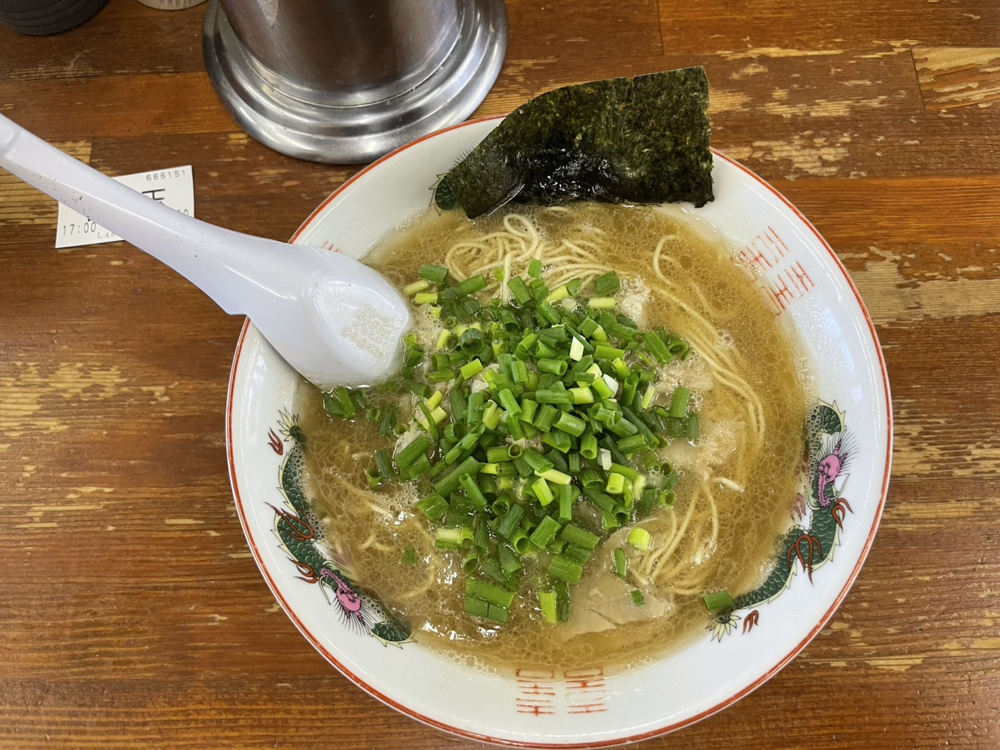
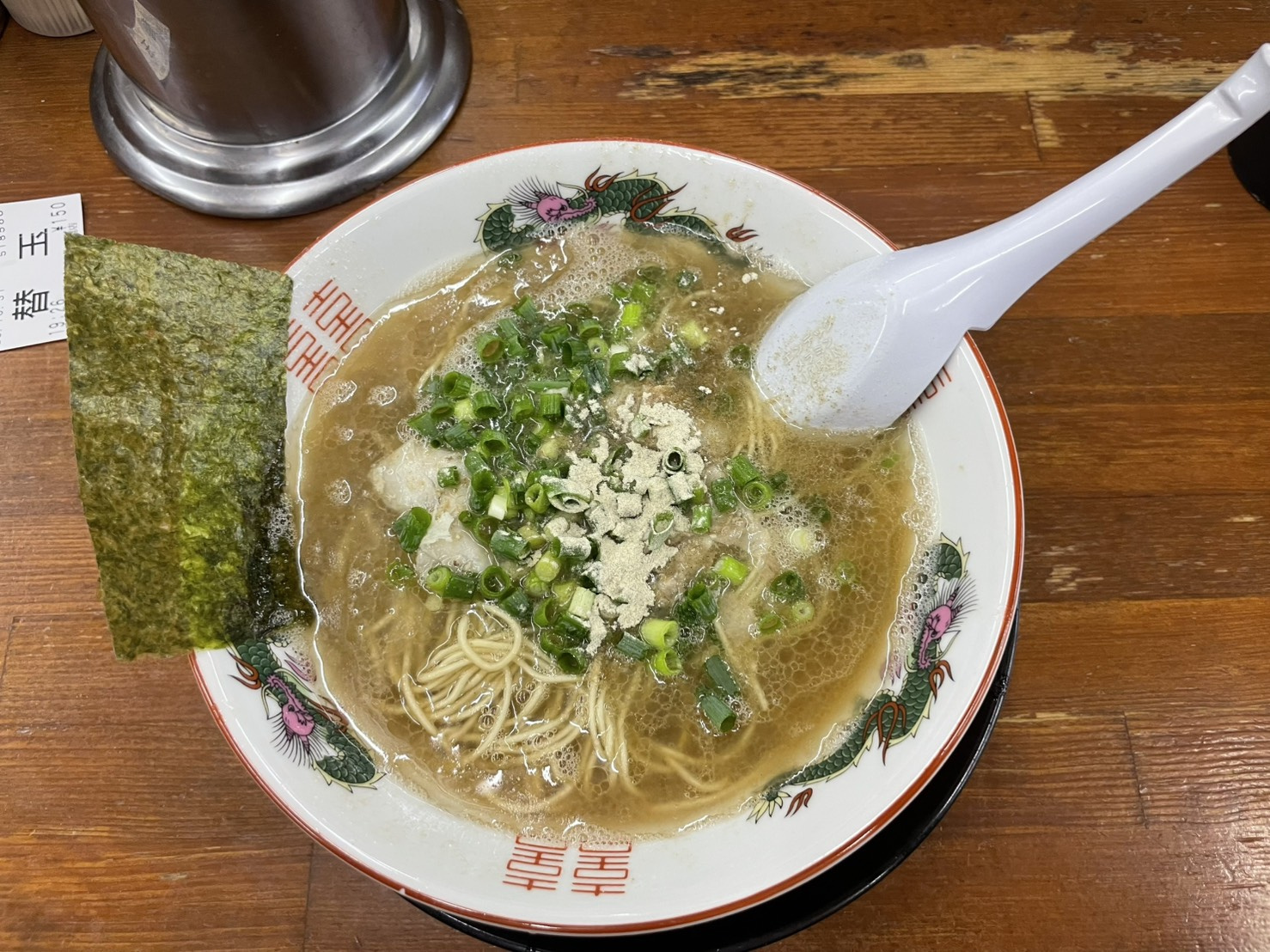
A bowl of Shekarashika’s Hakata-style tonkotsu ramen, with a rich, cloudy pork-bone broth. It’s topped with a mound of chopped green onions and a sheet of nori seaweed. Beneath the surface hides tender shreds of pork belly chashu, and fine straight noodles are submerged in the creamy soup.
As a Hakata ramen specialist, the menu is minimalistic and laser-focused on tonkotsu ramen. In fact, the shop’s only main dishes are ramen and chāshū-men (ramen with extra chashu pork) with a few variations like a boiled egg toppingameblo.jpgenjitsutouhi.com. Don’t expect gyoza, fried rice, or a large array of sides – at Shekarashika it’s all about the ramen (though simple white rice or musubi might be available as minor add-ons)genjitsutouhi.com. This no-nonsense approach is part of the shop’s identity. The standard Hakata ramen comes in a piping hot bowl of milky, opaque pork-bone broth that has a bold flavor and aroma. The soup is famously rich and hearty – one reviewer noted that it delivers pork bone umami with even a bit of “gamey” punch from the fats, not diluted with sweet veggies or other additivesgenjitsutouhi.com. This means the flavor is straight-on creamy tonkotsu; if you’re used to milder tonkotsu that some shops serve, be ready for a stronger impact here. Fans often compare the heavy, authentic broth to what you’d find in Kyushu (Hakata) or in hardcore tonkotsu shops like Muttekppou (a well-known thick tonkotsu ramen)genjitsutouhi.com.
The noodles are the classic Hakata ramen style – thin, hard, straight noodles made with low water content. They have a nice chew (“koshi”) despite their thinnessameblo.jp. You can choose your noodle firmness when ordering, typically on a scale such as barikata (extra firm), kata (firm), or normalameblo.jpgenjitsutouhi.com. This way, you get your preferred texture – Hakata locals often go for very firm noodles that still have a slight bite. The ramen is topped with plenty of chopped green onions and a sheet of nori seaweed for aroma. Uniquely, instead of large chashu slices, Shekarashika uses shredded or finely chopped pork belly chashu, which may be hiding under the green onion layer in your bowlameblo.jpgenjitsutouhi.com. This tender pulled-pork style chashu disperses in the soup, adding flavor to each sip. Additional toppings can be added for a small fee – options include negi (green onions), moyashi (bean sprouts), nori, karashi takana (spicy pickled mustard greens), etc., typically around ¥100 each (and freshly crushed garlic for about ¥50)genjitsutouhi.com. These condiments allow you to customize the flavor, for example adding the famous Hakata-style spicy pickled takana to give a fiery kick.
Portions are satisfying but on the slightly modest side, as is typical for Hakata ramen. The idea is that you can (and should!) order a 替え玉 (kaedama) – a refill of noodles – if you still have soup left. Kaedama is available for around ¥100–¥120 per extra serving of noodlesameblo.jpgenjitsutouhi.com, so many customers enjoy one or more noodle refills to make the most of the rich broth. Given the affordable prices (a basic ramen was about ¥650–¥700 a few years ago and remains well under ¥1,000 today)ameblo.jpgenjitsutouhi.com, indulging in toppings or an extra serving won’t break the bank. The shop’s philosophy is clearly to deliver authentic Hakata ramen as faithfully as possible – a stance that has won over many local ramen lovers.
Ambience & Dining Experience
The dining experience at Shekarashika is best described as fast-paced, rustic, and authentic. The moment you near the shop, there’s a distinctive porky aroma wafting through the air – that powerful tonkotsu smell which signals you’re in the right placegenjitsutouhi.com. Stepping inside, you’ll find a straightforward ramen-ya setup: a long counter, behind which the staff are hard at work boiling noodles and ladling soup, and customers perched on stools slurping away. The decor is minimal; some have likened the atmosphere to a Showa-era ramen joint that’s proudly stuck to traditiongenjitsutouhi.com. The shop is kept clean but don’t expect anything fancy – the focus here is on the food, not interior design.
One quirky aspect is the shop’s name and ethos. “Shekarashika,” meaning “Shut up! (It’s noisy)” in the Hakata dialect, gives a hint of the attitude: it’s as if the place is playfully telling customers to pipe down and enjoy their ramengenjitsutouhi.comgenjitsutouhi.com. Indeed, a blogger described the vibe as “just eat quietly!” – not that the staff are rude (they’re not), but the overall feeling is old-school and somewhat hard-boiledgenjitsutouhi.com. This might feel a bit intimidating to very casual or chatty diners, but for hardcore ramen fans, it adds to the charm. In practice, people do talk and enjoy themselves here, but most are focused on the delicious bowl in front of them. You’ll often see solo diners or pairs who came specifically for this famed ramen, quickly eating with serious concentration.
Despite its reputation and often full seats, service is efficient and turnover is quick. You typically receive your order within a few minutes of sitting downgenjitsutouhi.com. The staff are experienced – often including the owner or long-time cooks – and they keep things running smoothly without much fuss or ceremony. There isn’t background music or over-the-top hospitality; instead, the soundtrack is the boiling broth, the clinking of ramen bowls, and the occasional shout of “Irasshaimase!” and order calls. This creates an ambience that is immersive for ramen lovers – it feels like a little piece of Fukuoka ramen culture transplanted to Kobe. Notably, even after years, regulars comment that the shop hasn’t changed its character at all – the same flavors, same smells, and same cozy-but-lively atmosphere remain as they were in the beginningtabelog.com. It’s a time-tested formula that clearly works.
If you visit, keep in mind the shop’s straightforward style: you’ll likely purchase a ticket from a vending machine (common in ramen shops) or directly pay at the counter, then quickly get your ramen, customize with the available condiments, and dig in. Given the long opening hours, you might find yourself among late-night customers grabbing a midnight bowl – the vibe can be quite refreshing at 2 AM, slurping tonkotsu ramen alongside a mix of students (thanks to the nearby school), local workers, and ramen pilgrims. Overall, dining at Shekarashika Higashinada is an authentic experience that delivers exactly what it promises: great Hakata ramen, served without pretension.
Reputation & Reviews
Shekarashika’s Higashinada branch enjoys a strong reputation in the local food community. On Tabelog (Japan’s leading restaurant review site), it holds a 3.48★ rating with 400+ reviews, which is a commendable score on that platformtabelog.com. Impressively, over 6,000 users have marked it as a place they want to visit or have visited (“行きたい/行った”)tabelog.com, reflecting its popularity. Many reviewers hail it as one of the best tonkotsu ramen in the Kansai region, often comparing it favorably to the ramen in Hakata (Fukuoka) itselftabelog.com. In one recent review, a user bluntly called Shekarashika “the strongest tonkotsu ramen shop in Kansai”tabelog.com. While that is of course subjective, it speaks to the high esteem this shop is held in by enthusiasts.
Common praise in reviews includes the authenticity of the flavor – ramen aficionados love that the broth is thick, creamy, and unapologetically porky, just like in Kyushugenjitsutouhi.comameblo.jp. The distinctive smell (which can be intense to newcomers) is actually a badge of honor for many fans, who point out that “this is the real Hakata style, not toned down”ameblo.jp. The noodles also get compliments for their texture and how well they hold up in the broth, and people appreciate the ability to specify hardness to get it just right. The shredded chashu is another highlight – it mixes into the soup, giving bursts of pork flavor in every bite, rather than just sitting on top. Diners often pair their ramen with the free condiments on the counter like red pickled ginger and sesame, and especially 辛子高菜 (spicy pickled mustard greens) which add a spicy contrast to the rich soup (the shop offers takana as a topping, as noted, which many consider a must-have). The option of kaedama (noodle refills) is well-loved – many reviews mention taking at least one extra portion of noodles, because the broth is too good to wastegenjitsutouhi.com. All these elements contribute to a satisfying, customizable meal that keeps people coming back for more.
Negative or neutral comments are relatively rare, but some casual eaters mention that the pungent smell or strong taste can be an acquired taste – if you’re used to lighter ramen styles, Shekarashika’s bowl might be overwhelming at first. However, even some who were initially unsure often note that the flavor wins them over by the end of the bowlretty.megenjitsutouhi.com. Another minor point is that, being a popular spot, it can be a bit crowded at peak times (like weekend lunches), but as noted, the wait is usually short given the efficient service. A few drivers mention the lack of a parking lot as an inconvenience, but this is common in urban ramen shops and nearby coin parking is availabletabelog.com.
In summary, Shekarashika Higashinada is highly regarded for delivering exactly what it promises: a top-notch Hakata ramen experience in Kobe. It has stood the test of time – open since October 2000 at this locationtabelog.com – and continues to be a go-to ramen shop for locals and visitors alike. If you’re in the Kobe area and love ramen (especially if you crave that authentic tonkotsu punch), Shekarashika Higashinada should be on your list. It’s a slurp of Fukuoka in the heart of Hyōgo, and as many would agree, it’s “やっぱりしぇかは美味いなぁ〜” – after all, Shekarashika’s ramen is just delicious!t
ホームページ
「六甲道・灘区・東灘区のお部屋探しなら、地域密着のワンプラス六甲道本店にお任せください。豊富な物件情報は公式サイトからご覧いただけます。」
ワンプラス六甲道本店ホームページはこちら
賃貸検索
「学生さんからファミリーまで幅広く対応!未公開物件も含めた賃貸情報は下記リンクからチェックできます。」
賃貸物件検索はこちら
売買検索
「マイホーム購入をご検討中の方は必見!神戸市灘区・東灘区・芦屋の最新売買情報はこちらから検索できます。」
売買物件検索はこちら
売却査定
「大切な資産を安心して売却するために、地域相場を熟知したスタッフが丁寧に査定いたします。」
不動産売却査定はこちら
SNS・LINE
「もっと気軽にお部屋探し・ご相談をしたい方は、LINEやInstagramからもどうぞ!」
LINEでのお問い合わせはこちら
Instagramはこちら